

Nature News
-
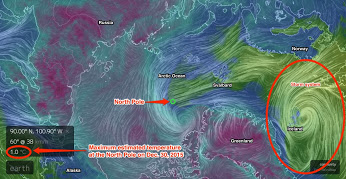
LIGO detects whispers of another black-hole merger
After historic first discovery last September, twin observatories detected gravitational waves again on Boxing Day.
-
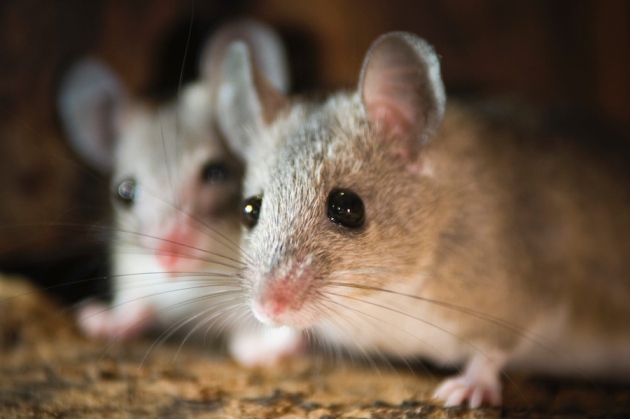
First rodent found with a human-like menstrual cycle
The spiny mouse could one day aid studies of women’s reproductive problems.
-
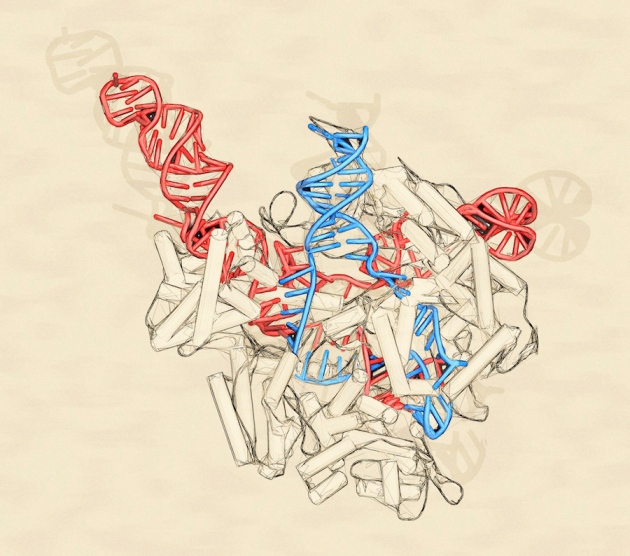
CRISPR gene-editing system unleashed on RNA
Researchers who discovered a molecular “scissors” for snipping genes have now developed a similar approach for targeting and cutting RNA. The new cutting tool should help researchers better understand RNA’s role in cells and diseases, and some believe it could one day be useful in treatments for illnesses from Huntington’s to heart disease.
-
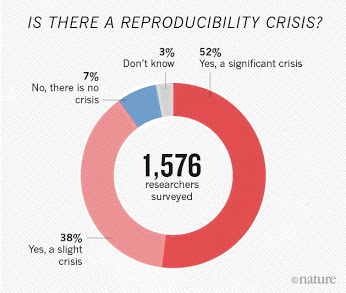
1,500 scientists lift the lid on reproducibility
More than 70% of researchers have tried and failed to reproduce another scientist’s experiments, and more than half have failed to reproduce their own experiments. Those are some of the telling figures that emerged from Nature‘s survey of 1,576 researchers who took a brief online questionnaire on reproducibility in research.
-
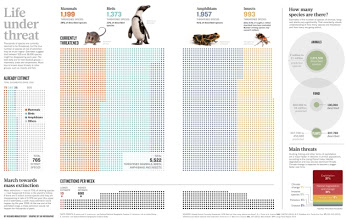
Biodiversity: Life – a status report
Of all the species that have populated Earth at some time over the past 3.5 billion years, more than 95% have vanished — many of them in spectacular die-offs called mass extinctions. On that much, researchers can generally agree. Yet when it comes to taking stock of how much life exists today — and how…
-
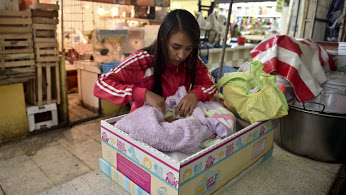
Mixed-up metals make for stronger, tougher, stretchier alloys
Materials scientists are creating next-generation mixtures with remarkable properties.
-

Mirror-image enzyme copies looking-glass DNA
Researchers at Tsinghua University in Beijing have created a mirror-image version of a protein that performs two of the most fundamental processes of life: copying DNA and transcribing it into RNA. The work is a “small step” along the way to making mirror-image life forms.
-
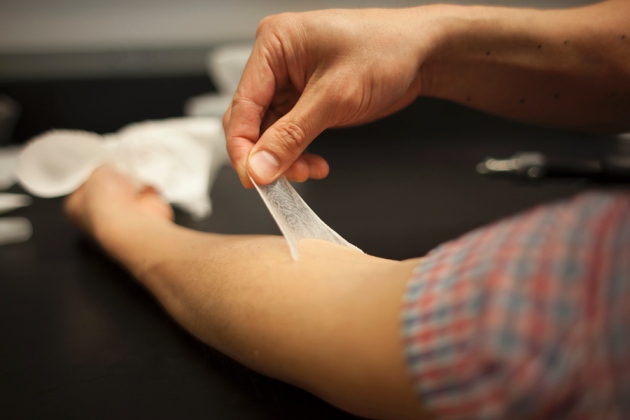
Transparent film smoothes sagging skin back into shape
Silicone polymer mimics youthful elasticity of skin.
-
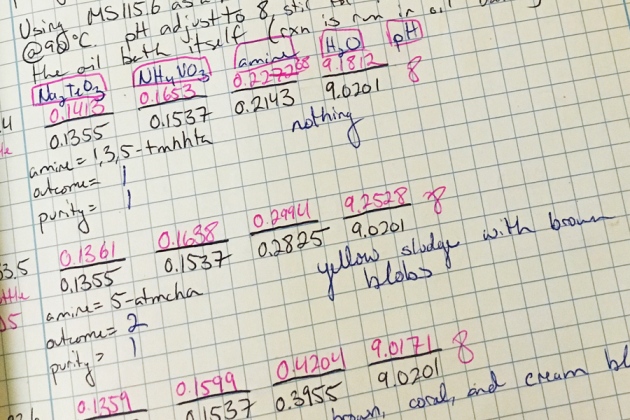
Computer gleans chemical insight from lab notebook failures
Machine-learning approach mines unpublished ‘dark’ reactions that don’t work, as well as ones that do.