

Science
-

Milky Way’s black hole may be spewing out cosmic rays
Mysterious high-energy particles known as cosmic rays zip through space at a wide range of energies, some millions of times greater than those produced in the world’s most powerful atom smasher. Scientists have long thought cosmic rays from inside our galaxy come from supernova explosions, but a new study has fingered a second source: the…
-

Corrupt societies encourage lying
When do we decide it’s OK to tell a lie? Perhaps when we see people in positions of power doing the same. A new study finds that individuals are more likely to lie if they live in a country with high levels of institutional corruption and fraud—suggesting that poorly run institutions hurt society in more ways…
-
Astronomers spot galaxy born near the birth of the universe
Thoroughly smashing a distance record set just last year, astronomers have discovered a galaxy that lies 13.4 billion light-years from Earth—and thus shone forth when the universe was less than 3% of its current age of 13.8 billion years.
-
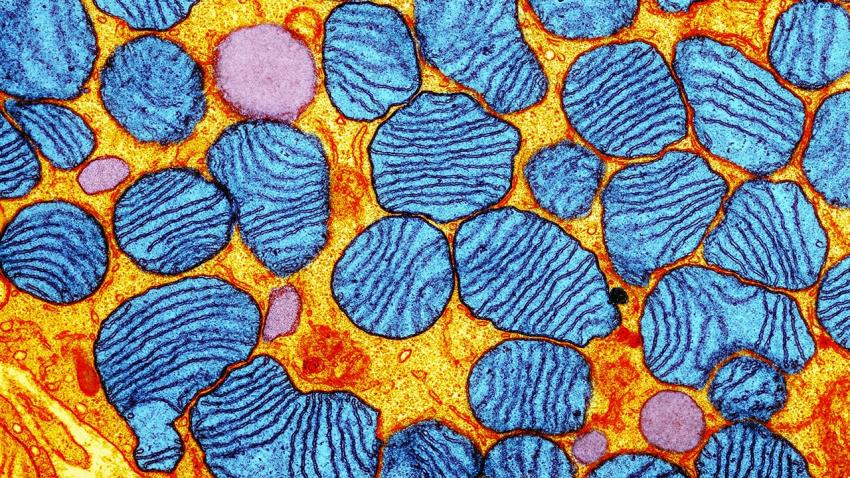
Oxygen deprivation counters deadly mitochondrial disease in animals
For most creatures, oxygen is life. But biology is complicated, and researchers hoping to treat diseases in which our cells’ energy-providing machinery is faulty now suggest the opposite may also be true: Depriving cells of oxygen could be a boon to health. The unexpected idea has been tested only in cells and animals so far,…
-
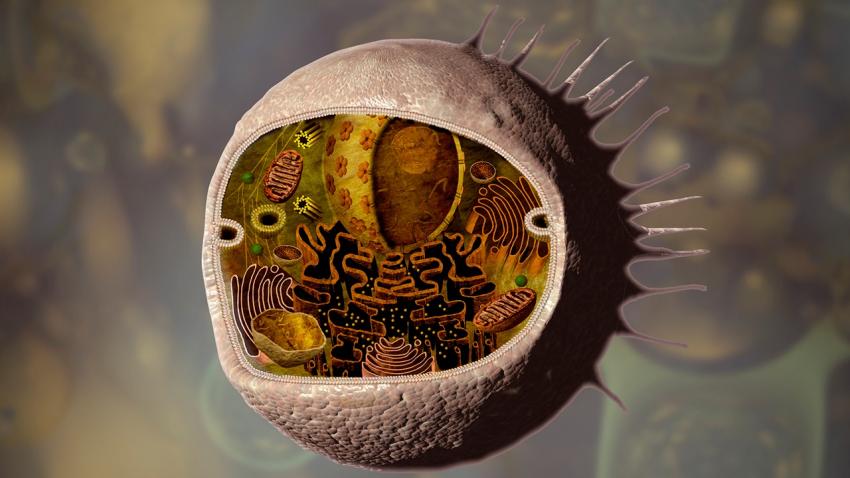
Why do our cell’s power plants have their own DNA?
It’s one of the big mysteries of cell biology. Why do mitochondria—the oval-shaped structures that power our cells—have their own DNA, and why have they kept it when the cell itself has plenty of its own genetic material? A new study may have found an answer.
-
Why is it so hard to squash a cockroach?
Insects, whether they creep or fly, live in a world of hard knocks. Who has not stepped on a cockroach, then raised her shoe to watch the creature get up and scoot under a door? Bees and wasps, for their part, face a never-ending obstacle course of leaves, stems, and petals—bumblebees crash their wings into…
-

Women are more empathetic than men, yawning study suggests
Catching a yawn is more likely to occur between relatives than strangers, and scientists believe it’s sign of empathy. A new study suggests that women (traditionally branded the more empathetic sex) might be more susceptible to copycat yawning than men.
-
Consciousness may be the product of carefully balanced chaos
Is my yellow the same as your yellow? Does your pain feel like my pain? The question of whether the human consciousness is subjective or objective is largely philosophical. But the line between consciousness and unconsciousness is a bit easier to measure. In a new study of how anesthetic drugs affect the brain, researchers suggest…
-

What’s behind the Arctic’s increasing carbon dioxide fluctuations?
It’s no mystery why carbon dioxide (CO2) levels fluctuate with the seasons: As greenery grows in the spring and summer, it soaks up the planet-warming gas, and when trees shed their leaves in the autumn, some of that gas returns to the atmosphere. But scientists haven’t figured out why the differences between summer and winter…