

Science
-
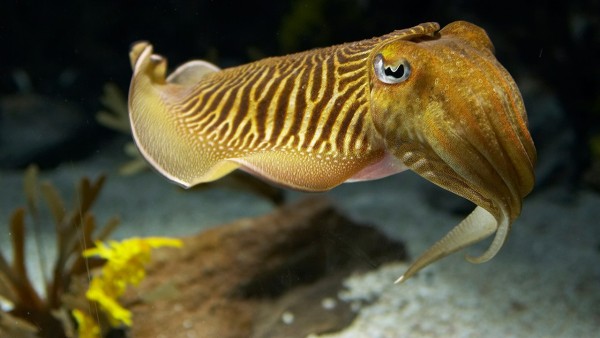
When cuttlefish hold their breath, they become nearly invisible to sharks
Scientists have long known that cuttlefish (Sepia officinalis, shown) and some of their kin stop breathing when threatened by predators, but they supposed that freezing in place merely aided the creature’s visual camouflage. Turns out, it serves another purpose: A lack of water flowing over the gills decreases electrical activity there that can betray the…
-

New type of ‘flow battery’ can store 10 times the energy of the next best device
Industrial-scale batteries, known as flow batteries, could one day usher in widespread use of renewable energy—but only if the devices can store large amounts of energy cheaply and feed it to the grid when the sun isn’t shining and the winds are calm. That’s something conventional flow batteries can’t do. Now, researchers report that they’ve…
-

How the moon got its tilt—and Earth got its gold
Miniplanets zooming through our early solar system passed close to our moon and tugged it into the strange, tilted orbit it has today, according to a new study. The findings solve a longstanding mystery and may also explain why Earth’s crust is unexpectedly rich in gold and platinum: When some of these small planets slammed…
-
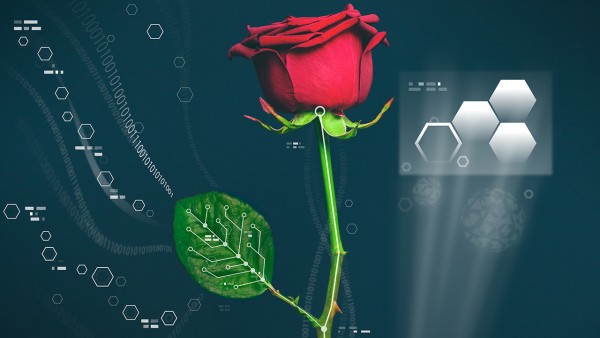
In electrifying advance, researchers create circuit within living plants
Talk about flower power. Researchers have crafted flexible electronic circuits inside a rose. Eventually such circuitry may help farmers eavesdrop on their crops and even control when they ripen. The advance may even allow people to harness energy from trees and shrubs not by cutting them down and using them for fuel, but by plugging…
-
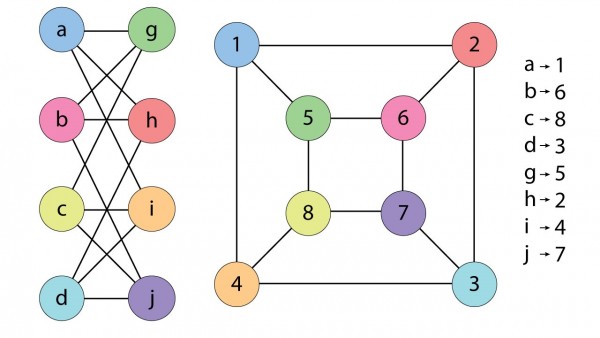
Mathematician claims breakthrough in complexity theory
For days, rumors about the biggest advance in years in so-called complexity theory have been lighting up the Internet. That’s only fitting, as the breakthrough involves comparing networks just like researchers’ webs of online connections. László Babai, a mathematician and computer scientist at the University of Chicago in Illinois, has developed a mathematical recipe or…
-
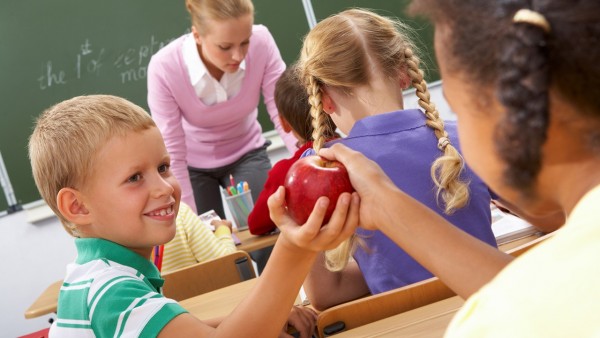
Nonreligious children are more generous
Religious doctrines typically urge the faithful to treat others with compassion and to put the greater good before selfish interests. But when it comes to generosity, nonreligious kids seem to be more giving, according to a new study of 1170 children from around the world. Children from religious homes—particularly Muslims—also showed a greater inclination to…
-

Feature: How the Amazon became a crucible of life
The western Amazon, which includes parts of Peru, Ecuador, Colombia, and northwestern Brazil, “is the most diverse region in the world in terms of plants,” says Christopher Dick, an evolutionary biologist at the University of Michigan, Ann Arbor. “We have about 300 tree species in eastern North America. In the western Amazon, we have 300…
-
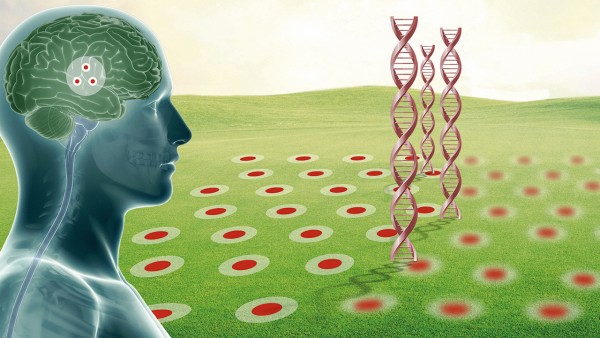
Alzheimer’s disease tied to brain’s navigation network
The way you navigate a virtual maze may predict your chances of getting Alzheimer’s. That’s the conclusion of a new study, which finds that people at risk for Alzheimer’s have lower activity in a newly-discovered network of navigational brain cells known as “grid cells.” The finding could lead to new ways to diagnose this debilitating…
-
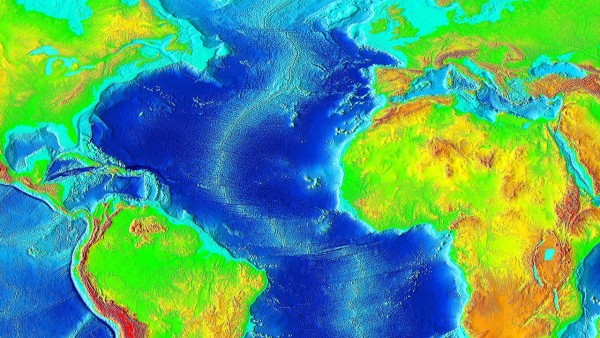
Climate cycles didn’t shape ocean’s abyssal hills
Can Earth’s ice ages be seen in the undulating fabric of the sea floor? Earlier this year, a pair of papers suggested that long-term cycles of glaciation and melting trigger pulses of lava that harden into sea floor hills. But now, a new study throws cold water on that hypothesis, finding that these climate-driven pulses…