

Science
-

Nonreligious children are more generous
Religious doctrines typically urge the faithful to treat others with compassion and to put the greater good before selfish interests. But when it comes to generosity, nonreligious kids seem to be more giving, according to a new study of 1170 children from around the world. Children from religious homes—particularly Muslims—also showed a greater inclination to…
-
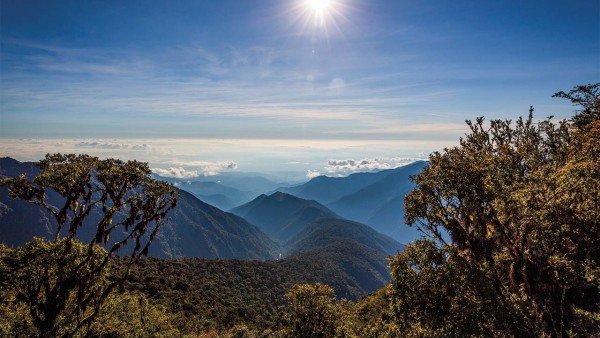
Feature: How the Amazon became a crucible of life
The western Amazon, which includes parts of Peru, Ecuador, Colombia, and northwestern Brazil, “is the most diverse region in the world in terms of plants,” says Christopher Dick, an evolutionary biologist at the University of Michigan, Ann Arbor. “We have about 300 tree species in eastern North America. In the western Amazon, we have 300…
-
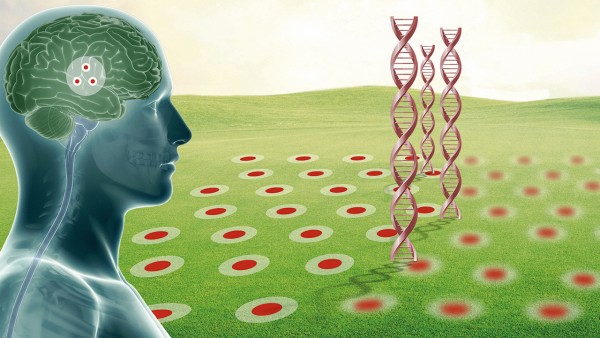
Alzheimer’s disease tied to brain’s navigation network
The way you navigate a virtual maze may predict your chances of getting Alzheimer’s. That’s the conclusion of a new study, which finds that people at risk for Alzheimer’s have lower activity in a newly-discovered network of navigational brain cells known as “grid cells.” The finding could lead to new ways to diagnose this debilitating…
-
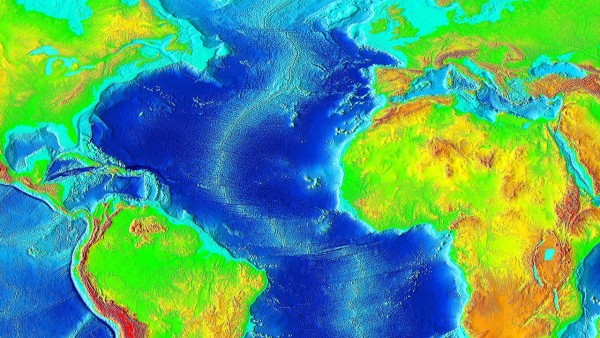
Climate cycles didn’t shape ocean’s abyssal hills
Can Earth’s ice ages be seen in the undulating fabric of the sea floor? Earlier this year, a pair of papers suggested that long-term cycles of glaciation and melting trigger pulses of lava that harden into sea floor hills. But now, a new study throws cold water on that hypothesis, finding that these climate-driven pulses…
-

Bedtime problems boost kids’ math performance
Yet if a school child’s parents replace a bedtime story with a math discussion even one night a week, the child’s math skill may improve markedly compared with peers who listen to nonmathematical stories, a new study shows.
-
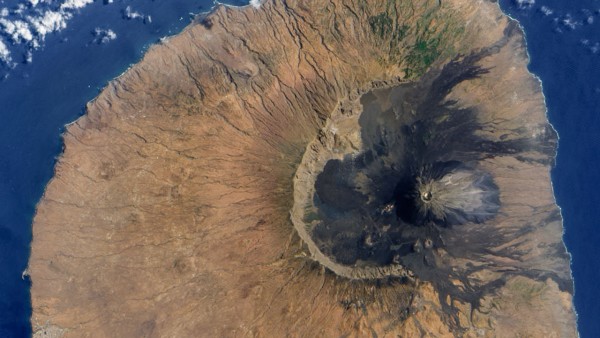
Ancient tsunami heaved 700-ton boulders over island cliffs
An ancient landslide on an island volcano is providing a worrisome lesson about tsunamis, thanks to some geologic sleuthing. According to a new study in the Cape Verde archipelago, a landslide triggered a tsunami powerful enough to push massive boulders on a neighboring island onto a high plateau. The scientists warn that although such events…
-
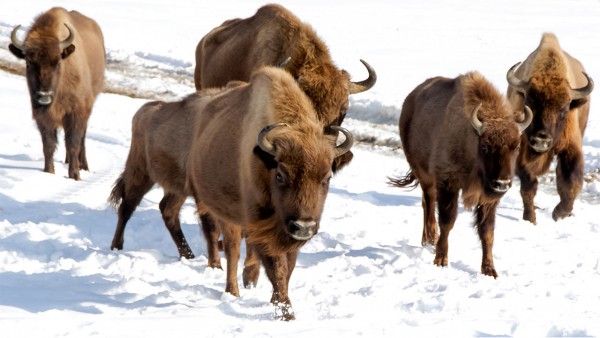
Why bison put their females in charge
Standing 2 meters tall and weighing as much as 1000 kilograms, European bison (Bison bonasus) are impressive animals. These cousins of the American bison—nearly driven to extinction in the last century—are being reintroduced in small herds across Europe, leading some farmers and forest managers to worry that the large herbivores will destroy their habitat.
-

The man who wants to beat back aging
On a blazingly hot morning this past June, a half-dozen scientists convened in a hotel conference room in suburban Maryland for the dress rehearsal of what they saw as a landmark event in the history of aging research. In a few hours, the group would meet with officials at the U.S. Food and Drug Administration…
-

How neutrinos saved your teeth from cavities
Every second, trillions of neutrinos born at the center of the sun shoot through your body. They don’t hurt you, because these ghostly elementary particles almost never interact with matter. But astronomers report that nonetheless neutrinos forged much of the universe’s fluorine, an element added to toothpaste and water to fight cavities and whose cosmic…