

Science
-

All languages have evolved to have this in common
Have you ever wondered why you say “The boy is playing Frisbee with his dog” instead of “The boy dog his is Frisbee playing with”? You may be trying to give your brain a break, according to a new study. An analysis of 37 widely varying tongues finds that, despite the apparent great differences among…
-
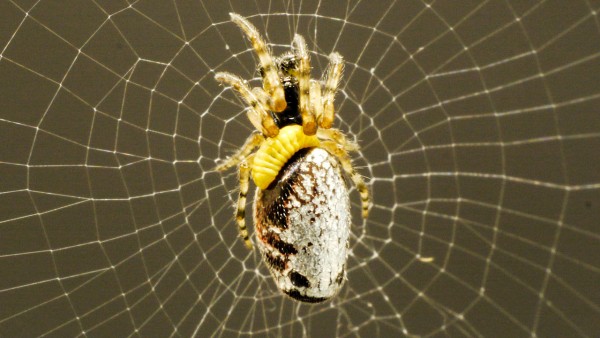
Wasps force zombie spiders to weave ‘cocoon’ webs
For some unlucky spiders, the zombie apocalypse is now. Some parasitic wasp larvae can take over their minds, forcing them to weave special webs the wasps use to support and protect their cocoons. A new study shows that the webs these particular zombie spiders weave are reinforced versions of the ones they normally use while…
-

Exploding star solves cosmic mystery
Astronomers have seen for the first time an exploding star—a nova—that seems to churn out lithium, solving a nagging cosmic mystery.
-
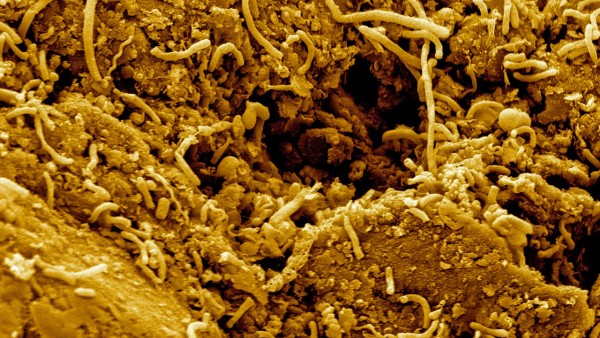
‘It’s like going to Pluto and seeing McDonald’s’
If you want to find some weird, undiscovered organisms, the sediments more than 2 kilometers below the ocean floor should be a good place to look. The heat and pressure are intense, and food is in short supply. But researchers have now obtained the first samples of microorganisms from these depths, and they turn out…
-
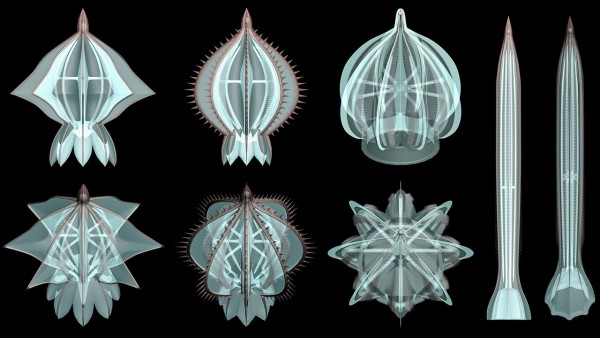
Early jellyfish-like creatures sported armor
Today, sea creatures known as comb jellies have soft bodies like jellyfish, but their ancestors projected a tougher image: tooling up with hard body parts, probably as protection from predators.
-

Astronomers spot the pebbles that turn into planets
Astronomers believe that planets form from disks of dust and gas that swirl around young stars. Models suggest that gravity clumps the dust together into tiny pebbles that in turn form larger rocks that eventually become planets. Whereas scientists have seen disks of gas and of dust, the intervening phases between dust and planet have…
-
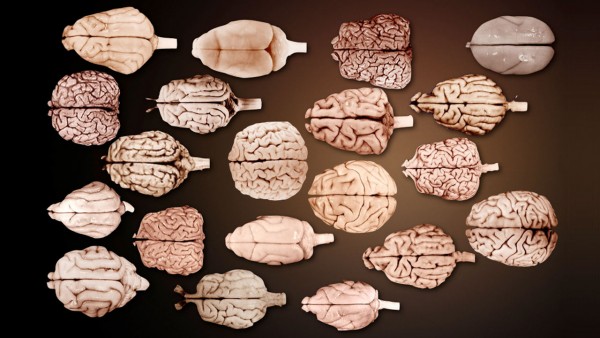
Your brain is like a wad of paper
Whether they’re from humans, whales, or elephants, the brains of many mammals are covered with elaborate folds. Now, a new study shows that the degree of this folding follows a simple mathematical relationship—called a scaling law—that also explains the crumpling of paper. That observation suggests that the myriad forms of mammalian brains arise not from…
-

Why a pandemic flu shot caused narcolepsy
The 2009 H1N1 influenza pandemic left a troubling legacy in Europe: More than 1300 people who received a vaccine to prevent the flu developed narcolepsy, an incurable, debilitating condition that causes overpowering daytime sleepiness, sometimes accompanied by a sudden muscle weakness in response to strong emotions such as laughter or anger. The manufacturer, GlaxoSmithKline (GSK), has acknowledged the link, and some patients and their families have…
-

Sorting cells through levitation
What looks like a row of drifting gumdrops could hold a wealth of information for both clinical researchers and bench scientists. A team of bioengineers and geneticists has designed a device that can suspend a single living cell between magnets and measure its density based on how high it floats. Such measurements could be used…