

Science
-

Underground injections turn carbon dioxide to stone
Researchers working in Iceland say they have discovered a new way to trap the greenhouse gas carbon dioxide (CO2) deep underground: by changing it into rock. Results published this week in Science show that injecting CO2 into volcanic rocks triggers a reaction that rapidly forms new carbonate minerals—potentially locking up the gas forever.
-
Some U.S. nuke testing sites are now less radioactive than Central Park
The Marshall Islands were one of the United States’s go-to nuclear testing sites in the 1940s and 1950s: Sixty-seven of the almost 200 tests during that period took place in these remote Pacific islands. Now, almost 60 years after the last bomb dropped, some of the islands abandoned because of the testing may finally be ready for…
-

Questions abound after study links tumors to cellphone radiation
Male rats exposed to cellphone radiation in a large U.S. government study were more likely to develop rare brain and heart cancers, a preliminary analysis has found, adding weight to concerns the ubiquitous devices could pose a health risk to people. But though the study is the most comprehensive yet of lab animals exposed to…
-
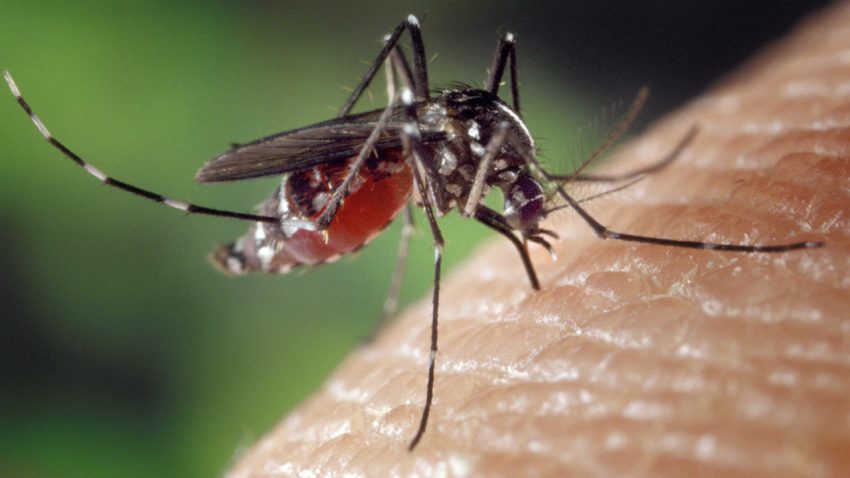
Top mosquito suspect found infected with Zika
The usual suspect has been caught, not red-handed but red-bellied. Since the beginning of the Zika virus outbreak in Brazil, health authorities and researchers have strongly suspected that the mosquito Aedes aegypti, known for spreading several deadly viruses, was also guilty of spreading Zika from one person to another. But direct evidence had been hard…
-

Humans are still evolving—and we can watch it happen
Many people think evolution requires thousands or millions of years, but biologists know it can happen fast. Now, thanks to the genomic revolution, researchers can actually track the population-level genetic shifts that mark evolution in action—and they’re doing this in humans.
-
Earth’s ancient atmosphere was half as thick as it is today
Air pressure is crucial for life. Not only does it help the atmosphere retain water vapor and trap heat from the sun, but it also affects the very chemical reactions on which life depends. Yet very little is known about how thick Earth’s ancient atmosphere once was. Now, a new study suggests that Earth’s atmosphere…
-

Dung beetles may have evolved to eat dinosaur poop
Modern-day dung beetles mostly eat the excrement of mammals: cows, elephants, you name it. But a new study hints at a reptilian source for the beetles’ original dung diet.
-
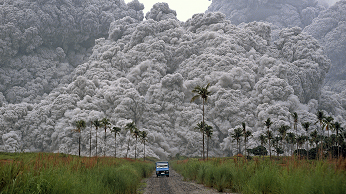
How earthquakes might trigger faraway volcanoes
Big earthquakes can slosh around the bubbly magma underneath volcanoes hundreds of kilometers away, researchers have found, releasing gases that can increase magma pressure and even lead to an eruption.
-

Cadaver study casts doubts on how zapping brain may boost mood, relieve pain
When Buzsáki and his colleague, Antal Berényi, of the University of Szeged in Hungary, mimicked an increasingly popular form of brain stimulation by applying alternating electrical current to the outside of the cadaver’s skull, the electrodes inside registered little. Hardly any current entered the brain. On closer study, the pair discovered that up to 90%…