

Ciencia en los medios
-
Vikings Possibly Spread Smooth-Riding Horses Around the World
Most horses can walk, trot, canter and gallop, but only certain breeds can amble. In a study published on Monday in Current Biology, scientists have proposed a hypothesis for how […]
-
Resuelto el misterio del neutrino estéril
Los datos de un observatorio en la Antártida descartan casi por completo la posibilidad de que exista un neutrino que podría ayudar a explicar la materia oscura
-

Must science be testable?
String wars among physicists have highlighted just how much science needs philosophy – and not just the amateur version
-

¿Por qué los girasoles siguen al Sol y de un momento a otro dejan de hacerlo?
Cada día, los girasoles se despiertan y se mueven hacia el Sol, siguiendo al astro en su ruta de este a oeste, como agujas de un reloj. A la noche […]
-

Terminator-Like Liquid Metals Enable Elastic Electronics
Researchers at RMIT University in Melbourne, Australia have developed a technique for enabling liquid metals to move and arrange themselves autonomously in response to varying external conditions. The resulting electronics […]
-
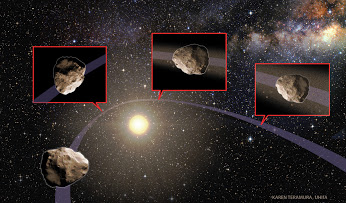
How a solar flare nearly triggered a nuclear
Against a backdrop of increasing tensions and Cold War nuclear threats, an act of war was detected. But the culprit wasn’t from Earth.
-

Putting a Price on Life
In cases of false imprisonment or wrongful death, is there a good way to calculate the worth of a human life?
-

El experimento MoEDAL del LHC restringe la búsqueda de monopolos magnéticos
Los investigadores del experimento MoEDAL del gran colisionador de hadrones del CERN han acotado los límites donde buscar una nueva partícula, el monopolo magnético. Estas partículas con un solo polo […]
-
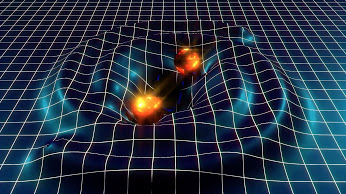
Why being bilingual helps keep your brain fit
Most people in the world speak more than one language, suggesting the human brain evolved to work in multiple tongues. If so, asks Gaia Vince, are those who speak only […]