

Science
-
![[:en]A gory tale behind the origin of ‘Halloween genes’[:]](https://katedra.eus/app/uploads/2015/10/unnamed-22.jpg)
[:en]A gory tale behind the origin of ‘Halloween genes’[:]
[:en]During the whole of a dull, dark, and soundless day in the autumn of the year, when the clouds hung oppressively low in the heavens and the shades of evening drew on, a sense of insufferable gloom fell on geneticist Michael O’Connor. [:]
-
![[:en]Are old cells breaking our hearts?[:]](https://katedra.eus/app/uploads/2016/10/aterosclerosis.jpg)
[:en]Are old cells breaking our hearts?[:]
[:en]Run-down cells, known as senescent cells, may make us old. A new study of mice suggests that they also drive another scourge of our advancing years—atherosclerosis, the buildup of fatty plaques in our arteries that can spur heart attacks and strokes. If scientists verify the findings, drugs that cull the cells could one day treat…
-
![[:es] Objects beyond Neptune provide fresh evidence for Planet Nine[:]](https://katedra.eus/app/uploads/2016/10/OrbitGraphic.png)
[:es] Objects beyond Neptune provide fresh evidence for Planet Nine[:]
[:es]In January, astronomers announced evidence for Planet Nine, a new giant planet, based on the way it would shepherd six icy worlds into clustered orbits on the other side of the solar system. Three new objects add to the picture.[:]
-
![[:es]Early cave art reveals elusive ‘Higgs bison’[:]](https://katedra.eus/app/uploads/2016/09/unnamed-3-7.jpg)
[:es]Early cave art reveals elusive ‘Higgs bison’[:]
[:es]Not only did a separate species appear between 13,000 and 17,000 years ago, but that it was the hybrid offspring of the steppe bison—whose descendants include today’s American bison—and another extinct cowlike mammal called the aurochs.[:]
-
![[:es]Dramatic twists could upend patent battle over CRISPR genome-editing method[:]](https://katedra.eus/app/uploads/2016/02/unnamed-8.jpg)
[:es]Dramatic twists could upend patent battle over CRISPR genome-editing method[:]
[:es]The 9-month-old patent battle over CRISPR, a novel genome-editing tool that could have immense commercial value, has taken two surprising twists. Last week, attorneys for the Broad Institute in Cambridge, Massachusetts, one of the research organizations vying for CRISPR rights, submitted motions that could let it win even if it loses. And yesterday, a new…
-
![[:es]Google’s new translation software is powered by brainlike artificial intelligence[:]](https://katedra.eus/app/uploads/2016/09/unnamed-20.jpg)
[:es]Google’s new translation software is powered by brainlike artificial intelligence[:]
[:es]The new system, a deep learning model known as neural machine translation, effectively trains itself—and reduces translation errors by up to 87%. [:]
-
![[:es]Five surprising ways AI could be a part of our lives by 2030[:]](https://katedra.eus/app/uploads/2016/09/unnamed-1-4.jpg)
[:es]Five surprising ways AI could be a part of our lives by 2030[:]
[:es]Defined simply, a computer with AI is able to respond to its environment by learning on its own—without humans providing specific instructions. A new report from Stanford University in Palo Alto, California, outlines how AI could become more integrated into people’s lives by 2030, and recommends how best to regulate it and make sure its…
-
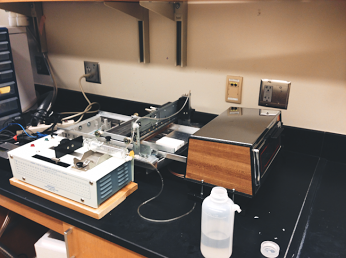
Industrial air pollution leaves magnetic waste in the brain
If you live in an urban environment, chances are you’ve got nanomagnets on the brain—literally. New research suggests that most magnetite found in the human brain, a magnetic iron oxide compound, comes from industrial air pollution.
-
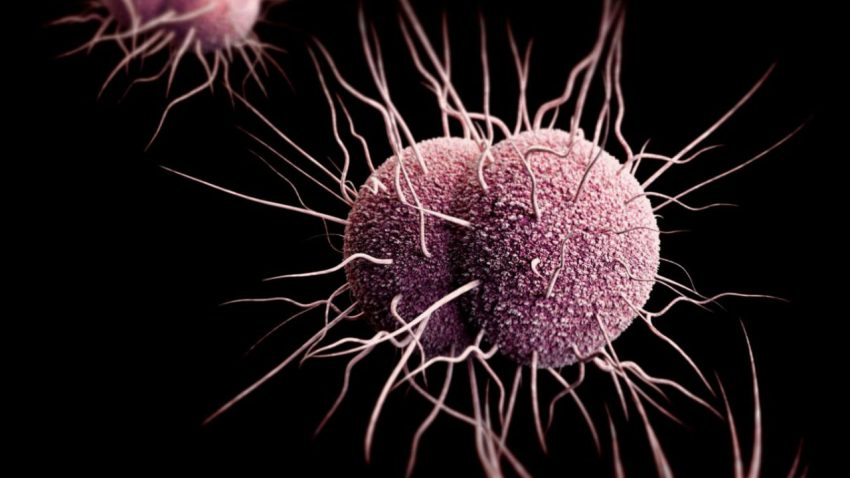
The world may soon run out of drugs to treat gonorrhea
It’s another sign that an era of untreatable bacterial infections is inching closer. The World Health Organization (WHO) released new guidelines for treating gonorrhea that reflect the sobering reality that this sexually transmitted disease is becoming ever more difficult to treat. WHO recommends no longer using quinolones, a class of antibiotics that has become less…