

Ciencia en los medios
-
Radiation superflares make Earth-like planet uninhabitable
Kepler 438b, hailed as most habitable planet beyond our solar system, is regularly blasted with enough radiation to strip away its atmosphere
-

Seigarren zentzumenaren sentsorea identifikatu dute
Bizitzeak pertzepzioa eskatzen du; inguruaz kontziente izan eta harekiko sentikorra izatea. Duela gutxi arte, pertzepzioa bost zentzumenetara mugatu zuen zientziak —ikusmena, ukimena, entzumena, usaimena eta dastamena—, baina neurobiologiak aski erakutsi du pertzepzioak hamaika ñabardura dituela. Seigarren zentzumenari propiozepzioa deitu zioten, eta haren sentsorea identifikatu dute, azkenik.
-
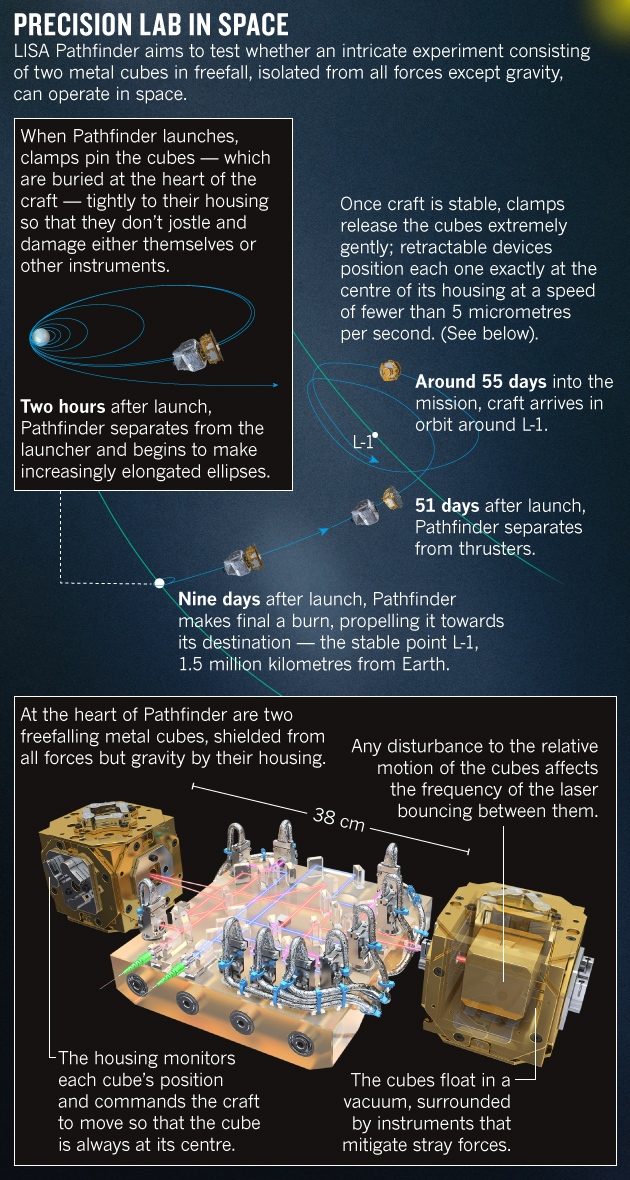
Freefall space cubes are test for gravitational wave spotter
Europe’s long-awaited LISA Pathfinder spacecraft has two metal cubes at its heart, which it will attempt to isolate from every force except for gravity.
-

The Strange Persistence of First Languages
Embracing the dominant language comes at a price. Like a household that welcomes a new child, a single mind can’t admit a new language without some impact on other languages already residing there. Languages can co-exist, but they tussle, as do siblings, over mental resources and attention.
-
Si hay vida extraterrestre, este ‘ordenador químico’ la encontrará
Encontrar vida en el espacio es comparable a buscar una aguja en un pajar… sin saber siquiera si esta existe. Para lograrlo es necesario utilizar tecnologías eficaces y portátiles.
-
El nacimiento de los monstruos
¿Cuándo aparecieron las primeras galaxias masivas? Un equipo de astrónomos identifica las primeras galaxias gigantes al analizar la zona más grande del cielo de la que se han obtenido imágenes hasta ahora en el infrarrojo.
-

Did a missing trace element trigger mass extinctions?
Selenium shortages coincide with species collapse.
-
5 Paintings That Show How Salvador Dali Was a Master of Visual Illusion
«Salvador Dali intuited that what we construe visually as reality is the product of the habits of the mind, more than of the eye,» neuroscientist Susana Martinez-Conde and her colleagues wrote after seeing the exhibit. «He understood that we create an ordered or disordered world from the intermittent and incomplete retinal information processed by your…
-
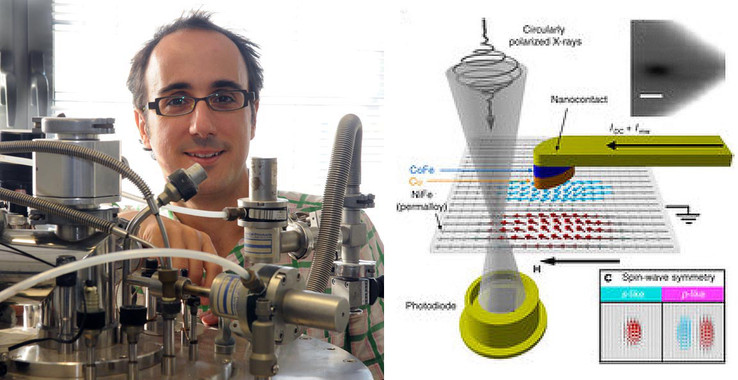
Una ‘película’ de espines para observar ondas magnéticas
Un equipo internacional de científicos, con participación de la Universidad de Barcelona, ha captado imágenes directas de las ondas magnéticas mediante experimentos en los que se generan secuencias de ondas de espines, los ‘giros’ de los electrones. El avance puede ayudar a manipular mejor la información en nanodispositivos magnéticos.