

The Guardian
-
![[:en]New species of ‘weird bird’-like dinosaur discovered in China[:]](https://katedra.eus/app/uploads/2016/11/2472.jpg)
[:en]New species of ‘weird bird’-like dinosaur discovered in China[:]
[:en]Named Tongtianlong limosus – which means “muddy dragon on the road to heaven” – the dinosaur appears to have died after getting stuck in the mud[:]
-
![[:en]US military successfully tests electrical brain stimulation to enhance staff skills[:]](https://katedra.eus/app/uploads/2016/11/3202.jpg)
[:en]US military successfully tests electrical brain stimulation to enhance staff skills[:]
[:en]Study paves way for personnel such as drone operators to have electrical pulses sent into their brains to improve effectiveness in high pressure situations[:]
-
![[:en]Did a memory experiment really show evidence for psychic abilities?[:]](https://katedra.eus/app/uploads/2016/11/5000.jpg)
[:en]Did a memory experiment really show evidence for psychic abilities?[:]
[:en]A 2011 psychology study claimed to show evidence for precognition – but had more to say about the state of psychology research than anything paranormal[:]
-
![[:es] From porkies to whoppers: over time lies may desensitise brain to dishonesty[:]](https://katedra.eus/app/uploads/2016/10/3744.jpg)
[:es] From porkies to whoppers: over time lies may desensitise brain to dishonesty[:]
[:es]Study suggests that telling small lies makes changes to the brain’s response to lying, rather than being a case of one lie necessitating another to maintain a story[:]
-
![[:es]Was Venus the first habitable planet in our solar system?[:]](https://katedra.eus/app/uploads/2016/10/4000.jpg)
[:es]Was Venus the first habitable planet in our solar system?[:]
[:es]Often referred to as Earth’s evil twin, Venus is the solar system’s hottest planet. But research suggests that Venus may have had vast oceans and a balmy climate[:]
-
![[:es]Is a moon village the next step for space exploration? ESA’s chief thinks so[:]](https://katedra.eus/app/uploads/2016/09/2489.jpg)
[:es]Is a moon village the next step for space exploration? ESA’s chief thinks so[:]
[:es]Could an outpost on the moon be the next logical step towards the know-how and infrastructure we need to head into the farther reaches of the solar system?[:]
-
![[:es]Scientists reveal most accurate depiction of a dinosaur ever created[:]](https://katedra.eus/app/uploads/2016/02/unnamed-8.jpg)
[:es]Scientists reveal most accurate depiction of a dinosaur ever created[:]
[:es]Reconstruction is based on studies of a spectacular fossil from China, preserved with skin and pigments intact[:]
-
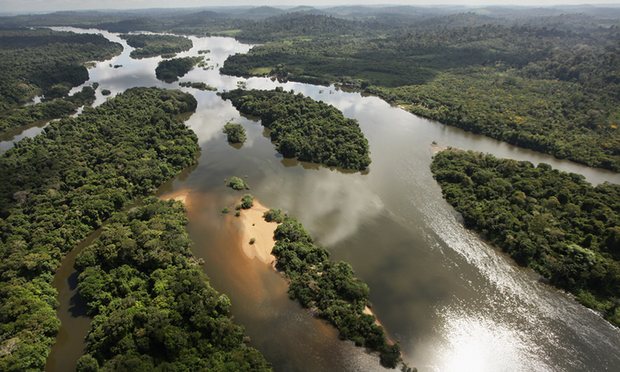
Climate change and other human activities are affecting species migration
Humans have an impact on species migration both through climate change and by changing the landscape.
-

Why scientists are losing the fight to communicate science to the public
Scientists and science communicators are engaged in a constant battle with ignorance. But that’s an approach doomed to failure