

Science
-

Women are more empathetic than men, yawning study suggests
Catching a yawn is more likely to occur between relatives than strangers, and scientists believe it’s sign of empathy. A new study suggests that women (traditionally branded the more empathetic sex) might be more susceptible to copycat yawning than men.
-

Consciousness may be the product of carefully balanced chaos
Is my yellow the same as your yellow? Does your pain feel like my pain? The question of whether the human consciousness is subjective or objective is largely philosophical. But the line between consciousness and unconsciousness is a bit easier to measure. In a new study of how anesthetic drugs affect the brain, researchers suggest…
-

What’s behind the Arctic’s increasing carbon dioxide fluctuations?
It’s no mystery why carbon dioxide (CO2) levels fluctuate with the seasons: As greenery grows in the spring and summer, it soaks up the planet-warming gas, and when trees shed their leaves in the autumn, some of that gas returns to the atmosphere. But scientists haven’t figured out why the differences between summer and winter…
-
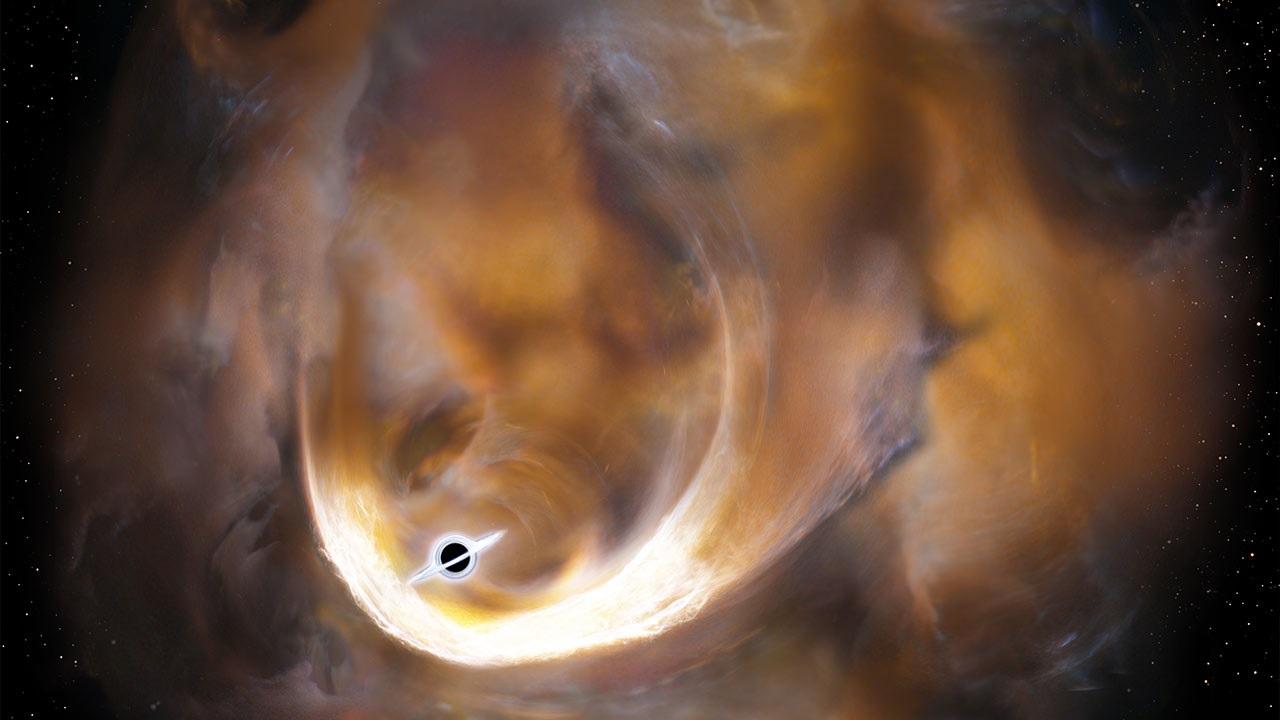
Astronomers spot another giant black hole in our backyard
Astronomers have long known that there is a supermassive black hole—known as Sagittarius A*—at the center of our galaxy. Now, a team of astronomers says they have found another one, not quite as big, orbiting 200 light-years from the center of the Milky Way.
-
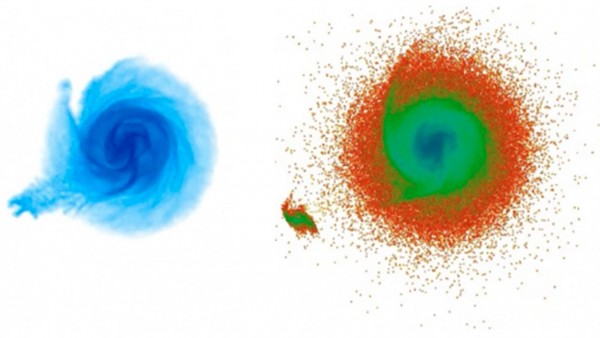
Rogue dwarf galaxy left ripples in Milky Way
A decade ago, astronomers discovered that the gas in our Milky Way galaxy is not spread out into a completely flat disk but has ripples, launching a search for the disturbances that caused them. Now researchers in the nascent field of galactic seismology have found a possible cause of at least some of those ripples:…
-
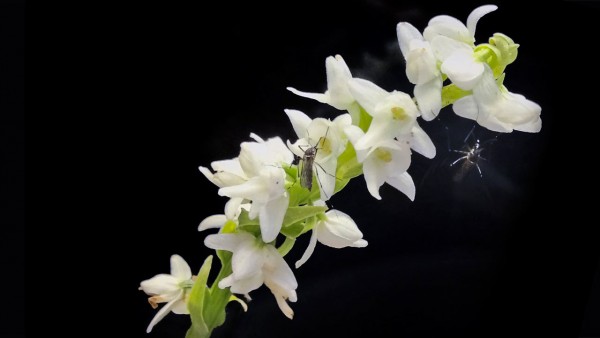
Orchids give off human ‘body odor’ to attract mosquitoes
Orchids are masters of deception. To lure potential pollinators, some resemble nectar-laden flowers, yet offer no sweet reward. Others smell like rotting meat. Still others look and smell like female insects. Now, sensory biologists have discovered orchids that emit an odor just like the human body.
-

Solving the mystery of dog domestication
2016 may be the year we finally figure out where dogs came from. Scientists have debated where and when our canine pals arose for decades, and now they may be close to an answer.
-

Physicists figure out how to retrieve information from a black hole
Black holes earn their name because their gravity is so strong not even light can escape from them. Oddly, though, physicists have come up with a bit of theoretical sleight of hand to retrieve a speck of information that’s been dropped into a black hole. The calculation touches on one of the biggest mysteries in…
-

EU frees up data for science
Scientists in Europe have won a major battle over access to personal health data. A research coalition had worried that draft European Union (EU) legislation would have sharply restricted scientific use of such data. This week, however, scientist-friendly amendments emerged from negotiations between the European Parliament, the European Council, and the European Commissio