

Resultados de búsqueda para: “search”
-

[:es]How hot will Earth get by 2100?[:]
[:es] Climate researchers are studying a fresh set of scenarios to model the future of the planet. [:]
-

[:es]Coronavirus Tests Science’s Need for Speed Limits[:]
[:es]Preprint servers and peer-reviewed journals are seeing surging audiences, with many new readers not well versed in the limitations of the latest research findings.[:]
-

[:es]Some Animals Have No Microbiome. Here’s What That Tells Us.[:]
[:es]To stay healthy, humans and some other animals rely on a complex community of bacteria in their guts. But research is starting to show that those partnerships might be more the exception than the rule.[:]
-

[:es] Exploring the potential of ‘hot qubits’[:]
[:es] Researchers address a practical constraint to quantum computing. [:]
-
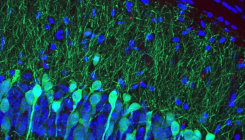
[:es] It’s the nose that makes sense of scents[:]
[:es] Research in mice shows how special cells help the brain distinguish between a range of competing odours. [:]
-

[:es]Where Do New Genes Come From?[:]
[:es]In their search for sources of genetic novelty, researchers find that some “orphan genes” with no obvious ancestors evolve out of junk DNA, contrary to old assumptions.[:]
-

[:es]‘A huge step forward.’ Mutant enzyme could vastly improve recycling of plastic bottles[:]
[:es]Recycling isn’t as guilt-free as it seems. Only about 30% of the plastic that goes into soda bottles gets turned into new plastic, and it often ends up as a lower strength version. Now, researchers report they’ve engineered an enzyme that can convert 90% of that same plastic back to its pristine starting materials. Work…
-

[:es]New genetic tools promise to unlock secrets of microscopic marine life[:]
[:es]Fifty percent of the oxygen we breathe comes from ocean microbes. Yet these tiny marine organisms have largely remained a mystery to science. Now, thanks to the efforts of more than 100 researchers around the globe, scientists have found a way to unlock the genomes of a handful of these creatures by genetically engineering their…
-
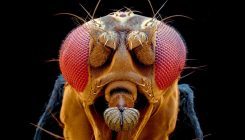
[:es]Proteins that sense light also sense taste, at least in fruit flies[:]
[:es]Like many animals, you couldn’t see without proteins called opsins, which dwell in the light-sensitive cells of your eyes. A new study reveals for the first time that fruit flies can also use some of these proteins, nestled at the tip of their nose, to taste noxious molecules in their food. Opsins in our bodies…