

Science
-
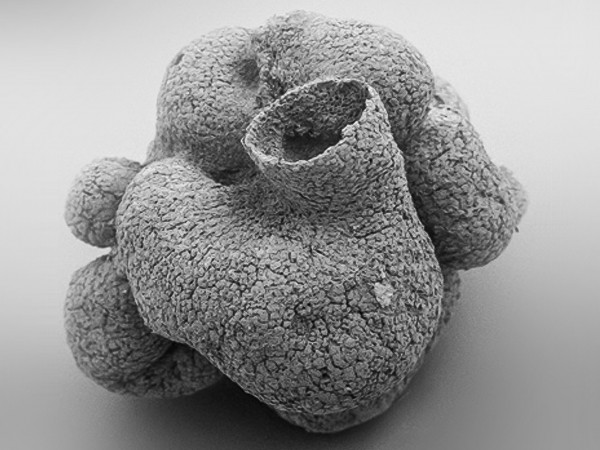
Oldest known sponge pushes back date for key split in animal evolution
To the untrained eye, real animal sponges may seem as boring as synthetic kitchen sponges. But the evolution of these highly porous creatures has long been a mystery, with major implications for the early evolution of animals
-

Menopausal killer whales are family leaders
Killer whales wouldn’t get far without their old ladies. A 9-year study of orcas summering off the southern tip of Vancouver Island in the Pacific Northwest finds that menopausal females usually lead their families to find salmon, particularly when the fish are scarce. Older females’ years of foraging experience may help their clans survive in…
-
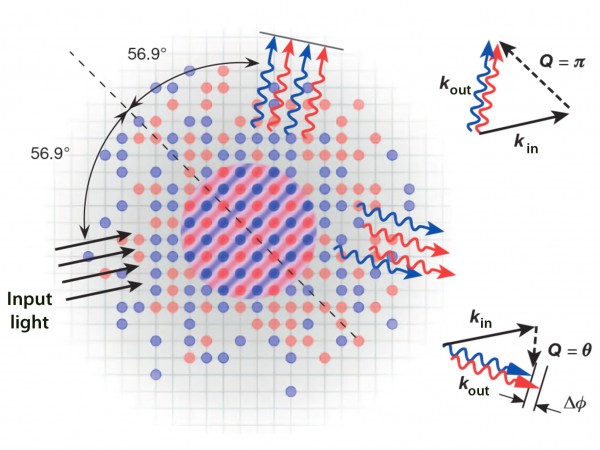
A step closer to explaining high-temperature superconductivity?
For years some physicists have been hoping to crack the mystery of high-temperature superconductivity—the ability of some complex materials to carry electricity without resistance at temperatures high above absolute zero—by simulating crystals with patterns of laser light and individual atoms. Now, a team has taken—almost—the next-to-last step in such «optical lattice» simulation by reproducing the…
-

Monster black hole born shortly after big bang
A team of astronomers was stunned to discover what is, in galactic terms, a monstrous baby: a gigantic black hole of 12 billion solar masses in a barely newborn galaxy, just 875 million years after the big bang.
-

Eating peanuts prevents allergy
It may sound radical, but it works: Eating peanuts slashes the chance of a peanut allergy, at least in children at high risk of developing one, a much-anticipated study finds. The results are likely to catapult a long-standing theory—that ingesting potential food allergens is a way to prevent allergies—into mainstream medicine.
-

Massive project maps DNA tags that define each cell’s identity
Our DNA may encode all the instructions needed to build the human body and keep it running, but each of our cells must follow just a subset of those instructions in order for the body to work properly. Thanks to the $300 million, National Institutes of Health (NIH) Roadmap Epigenomics Project, researchers have now identified…
-

Five things scientists could learn with their new, improved particle accelerator
The Large Hadron Collider (LHC) is back, and it’s better than ever. The particle accelerator, located at CERN, the European particle physics lab near Geneva, shut down in February 2013, and since then scientists have been upgrading and repairing it and its particle detectors. The LHC will be back up to full speed this May.
-

Nanoparticle drug stops cancer’s spread in mice
When a person dies from cancer, the culprit is usually not the original tumor but rather the cancerous cells that spread throughout the body and replicate in distant organs, a process called metastasis. Researchers have long known that metastasizing cancer cells slip their bonds and avoid immune detection by altering the sugars on their surfaces.…
-

Are earthquakes also earth burps?
Researchers have found that Earth belches a potent greenhouse gas known as tetrafluoromethane (CF4) during earthquakes and other tectonic events. The emissions likely aren’t making a significant contribution to global warming, but the findings could change the way scientists model future climate scenarios. They also complicate the use of CF4 as a way to measure…