

Nova next
-
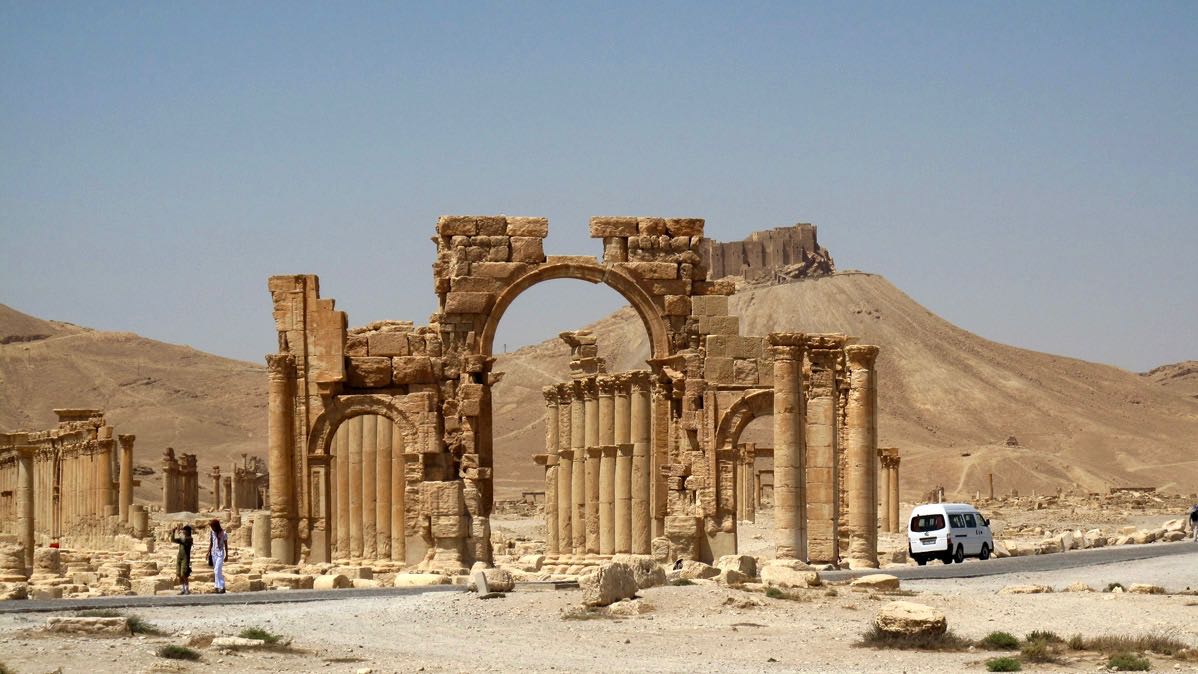
The Technology That Will Resurrect ISIS-Destroyed Antiquities
Satellite photography is revealing a shocking picture of the ongoing, systematic destruction of churches, mosques, antiquities, and museums throughout Syria and parts of Iraq and threats to heritage sites elsewhere in the Middle East. But that hasn’t stopped courageous local archaeologists and citizens from risking their lives to combat the devastation, aided by specialists outside…
-
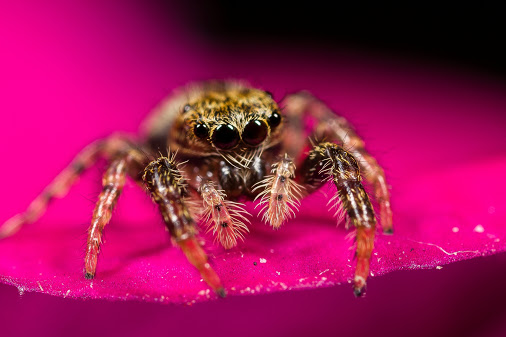
What Does Beauty Have To Do with Physics?
Physicists often describe their earliest experiences with the field as borderline spiritual, moments in which they realized that they—they!—can represent the world with math.
-
Beyond Antibiotics
Bacteria and other pathogens are developing multi-drug resistance, and our last, best strategies are failing.
-
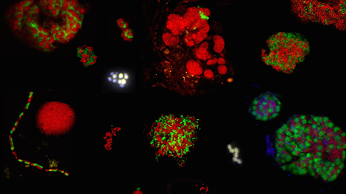
The Search for Superorganisms
Microbes that act as superorganisms have evolved to be deeply dependent on each other instead of competing. And this cooperation lets them survive in extreme places. Working together, the microbes are able to eat the methane from the seeps. In the process, they cause dissolved carbon molecules in the water to solidify on the seamount,…
-
The Illness That Never Ends
The idea that seemingly short-lived viral infections could cause long-term symptoms is fairly new to scientists. They long believed that once your body cleared an infection, its symptoms should disappear, too. But that isn’t always the case, says Kristy Murray, an epidemiologist and veterinarian at Baylor College of Medicine’s School of Tropical Medicine. “Some people are…
-
The Virus That Could Cure Alzheimer’s, Parkinson’s, and More
In 2004, the British chemist Chris Dobson speculated that there might be a universal elixir out there that could combat not just alpha-synuclein for Parkinson’s but the amyloids caused by many protein-misfolding diseases at once. Remarkably, in that same year an Israeli scientist named Beka Solomon discovered an unlikely candidate for this elixir, a naturally…
-
Are Black Holes Real?
Two even more exotic possibilities could explain the curious data physicists have gathered over the years.
-
Physics in 1 Trillion Years
When winter weather closed Harvard University one day in 2011, astronomer Avi Loeb used the snow day not to sled or start a new novel but to contemplate the future of the universe. In that future, cosmologists like him, who study the universe’s origins and evolution, might not be able to make a living.
-
How LIGO Detected Gravitational Waves
LIGO, the Laser Interferometer Gravitational-Wave Observatory, has been twenty-five years and more than half a billion dollars in the making. It involves 900 scientists and engineers, including many whose entire careers have been spent designing, building, and preparing to analyze data streaming in to LIGO. Their goal: To confirm, once and for all, Einstein’s century-old…