

La ciencia en los medios
-
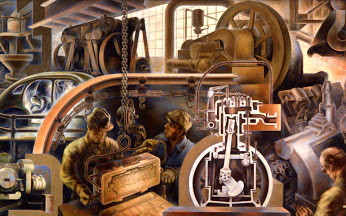
Why physics needs art to help picture the universe
Historians of science usually date the origin of the Scientific Revolution as 1543, when Copernicus’ De Revolutionibus first put the Earth in motion. While that is a convenient and defensible choice, it is not the only good candidate. An earlier scientific breakthrough, driven by the needs of art rather than astronomy, was equally profound: Filippo…
-

Math Quartet Joins Forces on Unified Theory
A new breakthrough that bridges number theory and geometry is just the latest triumph for a close-knit group of mathematicians.
-
El lago que revela los secretos del origen de la humanidad
Nuestros ancestros humanos eran muy elusivos. Sus restos están literalmente esparcidos por la Tierra, e incluso cuando se encuentra algún fósil es raro que esté completo. Por eso un asombroso descubrimiento en 1984 emocionó a los investigadores y, 30 años después, lo sigue haciendo.
-

¿Existen planetas con materia oscura?
Dos físicos teóricos de España y Alemania plantean la posible existencia de planetas compactos, con masas similares a la de Júpiter o la Tierra pero mucho más pequeños. Este nuevo tipo de objeto astronómico ocultaría materia oscura en su interior, aunque fuera visible por fuera. Comienza ahora su búsqueda por el universo.
-
Humans take note: Artificial intelligence just got a lot smarter
Today’s artificial intelligence may not be that clever, but it just got much quicker on the uptake. A learning program designed by a trio of researchers can now recognize and draw handwritten characters after seeing them only a few times, just as a human can. And can do it so well that people can’t tell…
-
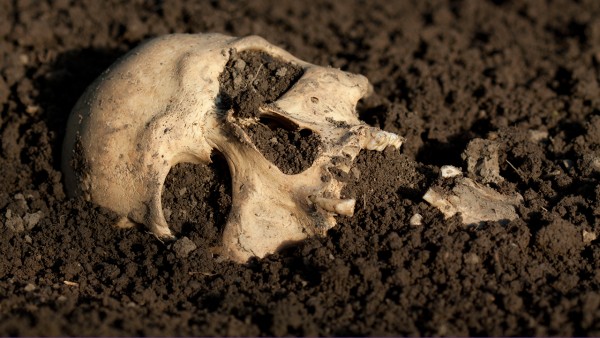
Thousands of unexpected microbes break down our bodies after death
“Dust to dust” may not be God’s work so much as the enterprising efforts of soil microbes. But until now, little was known about how these tiny undertakers turn our bodies to dust. New research shows that, no matter where we’re buried, the same bacteria, fungi, and other small organisms in the soil ransack our…
-

Brain-manipulation studies may produce spurious links to behaviour
Study shows that controlling neurons with light or drugs may affect the brain in more ways than expected.
-

Una posible explicación a las misteriosas luces en Ceres
Las imágenes tomadas por la sonda Dawn muestran hasta 130 puntos brillantes sobre la superficie del planeta enano. Un equipo de científicos publica en Nature la posible explicación.
-

Baidu’s Self-Driving Car Takes On Beijing Traffic
China’s leading search company is developing a self-driving car with BMW.
Got any book recommendations?