

La ciencia en los medios
-
¿Por qué los girasoles siguen al Sol y de un momento a otro dejan de hacerlo?
Cada día, los girasoles se despiertan y se mueven hacia el Sol, siguiendo al astro en su ruta de este a oeste, como agujas de un reloj. A la noche vuelven a hacerlo en sentido contrario para esperar su salida en la mañana del día siguiente. Pero un día dejan de hacerlo; alcanzan la madurez…
-
Terminator-Like Liquid Metals Enable Elastic Electronics
Researchers at RMIT University in Melbourne, Australia have developed a technique for enabling liquid metals to move and arrange themselves autonomously in response to varying external conditions. The resulting electronics aren’t just soft and free-flowing, but are highly reconfigurable as well.
-
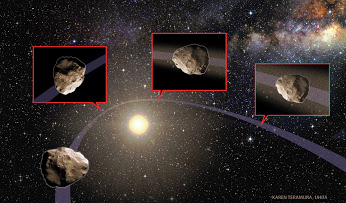
How a solar flare nearly triggered a nuclear
Against a backdrop of increasing tensions and Cold War nuclear threats, an act of war was detected. But the culprit wasn’t from Earth.
-
Putting a Price on Life
In cases of false imprisonment or wrongful death, is there a good way to calculate the worth of a human life?
-

El experimento MoEDAL del LHC restringe la búsqueda de monopolos magnéticos
Los investigadores del experimento MoEDAL del gran colisionador de hadrones del CERN han acotado los límites donde buscar una nueva partícula, el monopolo magnético. Estas partículas con un solo polo fueron teorizadas por el físico Paul Dirac en los años treinta, pero hasta ahora no se han observado. El Instituto de Física Corpuscular es el…
-
Why being bilingual helps keep your brain fit
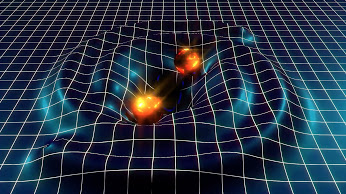
Most people in the world speak more than one language, suggesting the human brain evolved to work in multiple tongues. If so, asks Gaia Vince, are those who speak only one language missing out?
-

Seek, but shall ye find?
A proliferation of quieter submarines is pushing navies to concoct better ways to track them
-
Moonshine Master Toys With String Theory
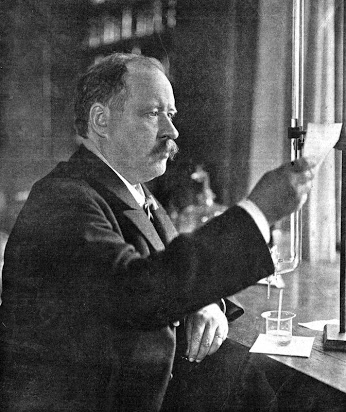
The physicist-mathematician Miranda Cheng is working to harness a mysterious connection between string theory, algebra and number theory.
-
Investigadores del CNIO descubren el mecanismo que permite al cáncer sobrevivir sin glucosa
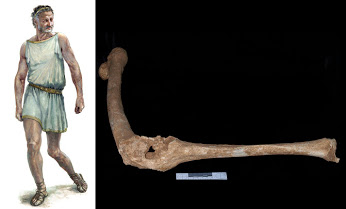
El hallazgo da pistas importantes que podrían ayudarnos a entender por qué aparece la resistencia a los fármacos que hacen ‘pasar hambre’ al tumor, y también cómo se las arreglan las células para sobrevivir en el centro de las masas tumorales, donde apenas llegan los vasos sanguíneos
Got any book recommendations?