

La ciencia en los medios
-

Las ballenas caribeñas cantan el chachachá
Así como la forma de hablar español es diferente en Cuba y en Argentina, en México y en Bolivia, los cachalotes del Caribe tienen acento propio.
-

La fingerita de El Salvador y los otros minerales raros identificados por la ciencia
Científicos han logrado clasificar los minerales más raros de la Tierra y todos comparten una particularidad: ninguno de los 2.500 identificados se ha encontrado en más de cinco lugares del planeta.
-

How to send a satellite abroad and prepare it for launch
When a satellite is built in France but launched in Russia, moving it can be a logistical nightmare. But European weather satellite Sentinel-3A made that trip, which involved planes, trains and automobiles … and, of course, a rocket. Belinda smith tracks its progress.
-

El futuro de la humanidad en sus manos
Un equipo de expertos investiga en un Instituto de Oxford los riesgos de extinción del ser humano
-
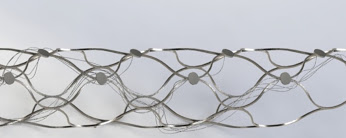
New ‘Stentrode’ Goes Deep Inside the Brain Without the Need for Brain Surgery
Researchers from the University of Melbourne have developed a matchstick-sized stent that can be inserted through a vein in a patient’s neck and the delivered to a suitable eavesdropping location within their skull. From this outpost, the stent (a small mesh tube meant to be implanted in a blood vessel) sends signals through wires to…
-

Submarinos nucleares con Windows XP y otras locuras del ‘software’ militar
Un pantallazo azul es siempre una mala noticia, pero puede resultar mortal cuando el ordenador que falla es el de un F-22 en pleno vuelo o un caro portaviones de 10 000 toneladas.
-
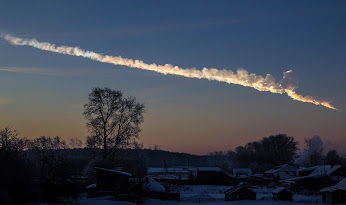
El misterio sobre el bólido de Cheliábinsk continúa tres años después
El 15 de febrero de 2013 el mundo estaba pendiente de la aproximación a la Tierra del asteroide (367943) Duende, pero de repente un superbólido cruzó la atmósfera y cayó cerca de la ciudad rusa de Cheliábinsk. Desde entonces se han escrito más de 200 estudios científicos para tratar de explicar la procedencia de este…
-
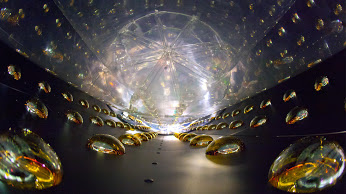
Astronomers Say Goodbye to the Philae Comet Lander
The time has finally come to say goodbye to the Philae lander, the first in history to land on a comet in transit — though with a rough touchdown that ultimately caused an early demise.
-
How LIGO Detected Gravitational Waves
LIGO, the Laser Interferometer Gravitational-Wave Observatory, has been twenty-five years and more than half a billion dollars in the making. It involves 900 scientists and engineers, including many whose entire careers have been spent designing, building, and preparing to analyze data streaming in to LIGO. Their goal: To confirm, once and for all, Einstein’s century-old…
Got any book recommendations?