

La ciencia en los medios
-
¿De dónde salió el agua de la Luna?
Un nuevo trabajo concluye que la mayor parte del agua llegó en los asteroides que chocaron contra nuestro satélite cuando aún estaba cubierto por un océano de magma.
-

Leiho bat biodibertsitateari
Bioaniztasuna.com webgunea biodibertsitateari behatzeko leiho bat da. Ikastetxeetan jartzeko diseinatua dago leihoa. “Hezkuntzaren ikuspuntutik pentsatuta dago, baina, hala ere, itsasoa gustuko duen edonork gozatzeko modukoa da”, dio Xabier Mina webgunearen egileak. Izan ere, oraingoz, urpekoak dira leihotik ikusten diren paisaiak.
-

Hasta 30 pesticidas en el polen de las abejas
La mitad de los tóxicos procede de los jardines caseros y entornos urbanos, y no de la agricultura
-
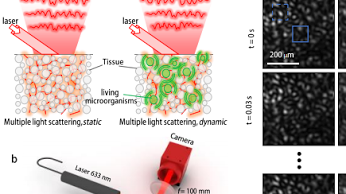
The Father of Modern Metal
The creation of stainless steel took equal parts metallurgy and perseverance.
-

Ozpin-eulien espermatozoide erraldoiak ulertzeko gakoak eman dituzte
Ozpin-euli arrak espermatozoide erraldoiak garatzera nola iritsi diren azaldu du ikertzaile-talde batek. 5,8 cm luze izatera irits daitezke ozpin-euliaren (Drosophila melanogaster) espermatozoideak, gorputzaren luzera baino 20 aldiz gehiago, eta gizakien espermatozoideena baino mila aldiz gehiago.
-

Los ingredientes de la vida que encontró la sonda Rosetta en un cometa
¿Llegó la vida a la Tierra a través de cometas? El reciente hallazgo de dos moléculas necesarias para la vida en la nube de polvo y gas que envuelve al cometa 67P/Churyumov-Gerasimenko refuerza esta teoría.
-
There’s a mathematical reason you’re less popular than your friends
Do you ever get the feeling that the people you follow on social media are more popular and active than you are?Unfortunately, this is probably not your imagination. Due to a strange social phenomenon, chances are that you’re right.
-

Cómo enseñar a un robot a sentir dolor
Científicos e ingenieros trabajan para dotar a los autómatas de un sistema parecido al nuestro para evitar que se hagan daño y mejorar sus interacciones en situaciones de peligro.
-
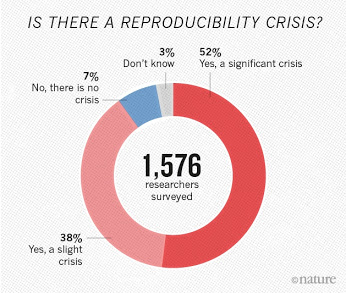
1,500 scientists lift the lid on reproducibility
More than 70% of researchers have tried and failed to reproduce another scientist’s experiments, and more than half have failed to reproduce their own experiments. Those are some of the telling figures that emerged from Nature‘s survey of 1,576 researchers who took a brief online questionnaire on reproducibility in research.
Got any book recommendations?