

Resultados de búsqueda para: “search”
-

[:es]Scientists unveil structure of human cannabinoid receptor[:]
[:es]Knowing the 3-D build of the CB1 receptor could help researchers design drugs with fewer side effects.[:]
-

[:es]Why infants pay more attention to people who speak their native language[:]
[:es]Babies are all about learning new stuff, the new research concludes. And they won’t waste a minute paying attention to someone they deem unlikely to deliver the goods.[:]
-

[:es]Was Venus the first habitable planet in our solar system?[:]
[:es]Often referred to as Earth’s evil twin, Venus is the solar system’s hottest planet. But research suggests that Venus may have had vast oceans and a balmy climate[:]
-

[:es]Dramatic twists could upend patent battle over CRISPR genome-editing method[:]
[:es]The 9-month-old patent battle over CRISPR, a novel genome-editing tool that could have immense commercial value, has taken two surprising twists. Last week, attorneys for the Broad Institute in Cambridge, Massachusetts, one of the research organizations vying for CRISPR rights, submitted motions that could let it win even if it loses. And yesterday, a new…
-
[:es]How science is giving voice to mummies such as Ötzi the Iceman[:]
[:es]Researchers recently managed to recreate the voice of 5,300-year-old Ötzi the iceman by recreating his vocal tract. The technology is promising and could be used to digitally produce the voices of other mummified remains. But how does it work and what else could it be used for?[:]
-

[:es]A Single Migration From Africa Populated the World[:]
[:es]Modern humans evolved in Africa roughly 200,000 years ago. But how did our species go on to populate the rest of the globe? The question, one of the biggest in studies of human evolution, has intrigued scientists for decades. In a series of extraordinary genetic analyses, researchers believe they have found an answer.[:]
-
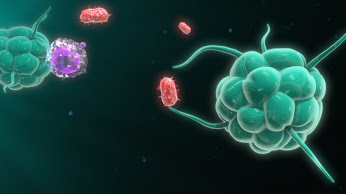
[:es]Iron Nanoparticles Trigger Immune System Offensive Against Cancer[:]
[:es]Recently, researchers from Stanford University discovered quite by accident that regular old iron nanoparticles, in the form of the injectable supplement ferumoxytol (currently used to treat iron-deficiency anemia), have a potent immune system rallying effect in mice. Simply, ferumoxytol prompts immune cells called macrophages to attack and destroy tumor cells. It seems likely the concept…
-

[:es]Lack of Evidence Plagues Neuroeducation Programs[:]
[:es]Scientists and educators have only begun to tap the edges of how neuroscience can inform how teachers teach and students learn. There are a few places where researchers have made significant progress—for example, in helping children with specific deficits in reading and math and in training young brains tune out distractions. For the rest of…
-
[:es]Scientists may have solved a key riddle about Antarctica — and you’re not going to like the answer[:]
[:es]In 1984, a team of Ohio State University researchers reported a surprising fossil find: More than a mile above sea level, in Antarctica’s freezing Transantarctic mountain range, fossilized deposits of tiny marine organisms called diatoms were found in rock layers dated to the Pliocene era, some 2 million to 5 million years ago. But how…