

Resultados de búsqueda para: “search”
-

[:es]AI face-scanning app spots signs of rare genetic disorders[:]
[:es]Deep-learning algorithm helps to diagnose conditions that aren’t readily apparent to doctors or researchers. [:]
-
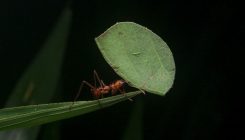
[:es]Leafcutter ant ‘compost piles’ produce potent greenhouse gases[:]
[:es]Leafcutter ants are known for producing lots of trash. In fact, the species Atta colombica (above) can create bathtub-size, thigh-high mounds of refuse that contain not only leaves, but also ant poop, bacteria, and dead ants. Now, researchers have discovered these massive compost piles are potent sources of greenhouse gases.[:]
-

[:es]Milestone Experiment Proves Quantum Communication Really Is Faster[:]
[:es]In a Paris lab, researchers have shown for the first time that quantum methods of transmitting information are superior to classical ones. [:]
-

[:es]‘Transmissible’ Alzheimer’s theory gains traction [:]
[:es]Mouse tests confirm that sticky proteins associated with degenerative brain diseases can be transferred — but researchers say risks for humans are likely to be minimal. [:]
-
[:es]In the Universe of Equations, Virtually All Are Prime[:]
[:es]Equations, like numbers, cannot always be split into simpler elements. Researchers have now proved that such “prime” equations become ubiquitous as equations grow larger. [:]
-
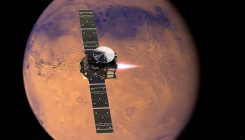
[:es]Martian methane—spotted in 2004—has mysteriously vanished[:]
[:es]Mars’s methane has gone missing. Scientists first detected traces of the gas—a critical indicator of life on Earth—in the planet’s atmosphere decades ago. But today, researchers reported that a European satellite hasn’t spotted a single trace of methane. The finding, if it holds up, could complicate scientific dreams that martian microbes might be spewing the…
-
[:es] Not in the DNA: Epigenetics discovered in single-celled archaea [:]
[:es]Researchers have found revolutionary evidence that an evolutionary phenomenon at work in complex organisms is at play in their single-celled, extreme-loving counterparts, too.[:]